
FEATURED
SPONSORED
VERIFIED
Related Blogs


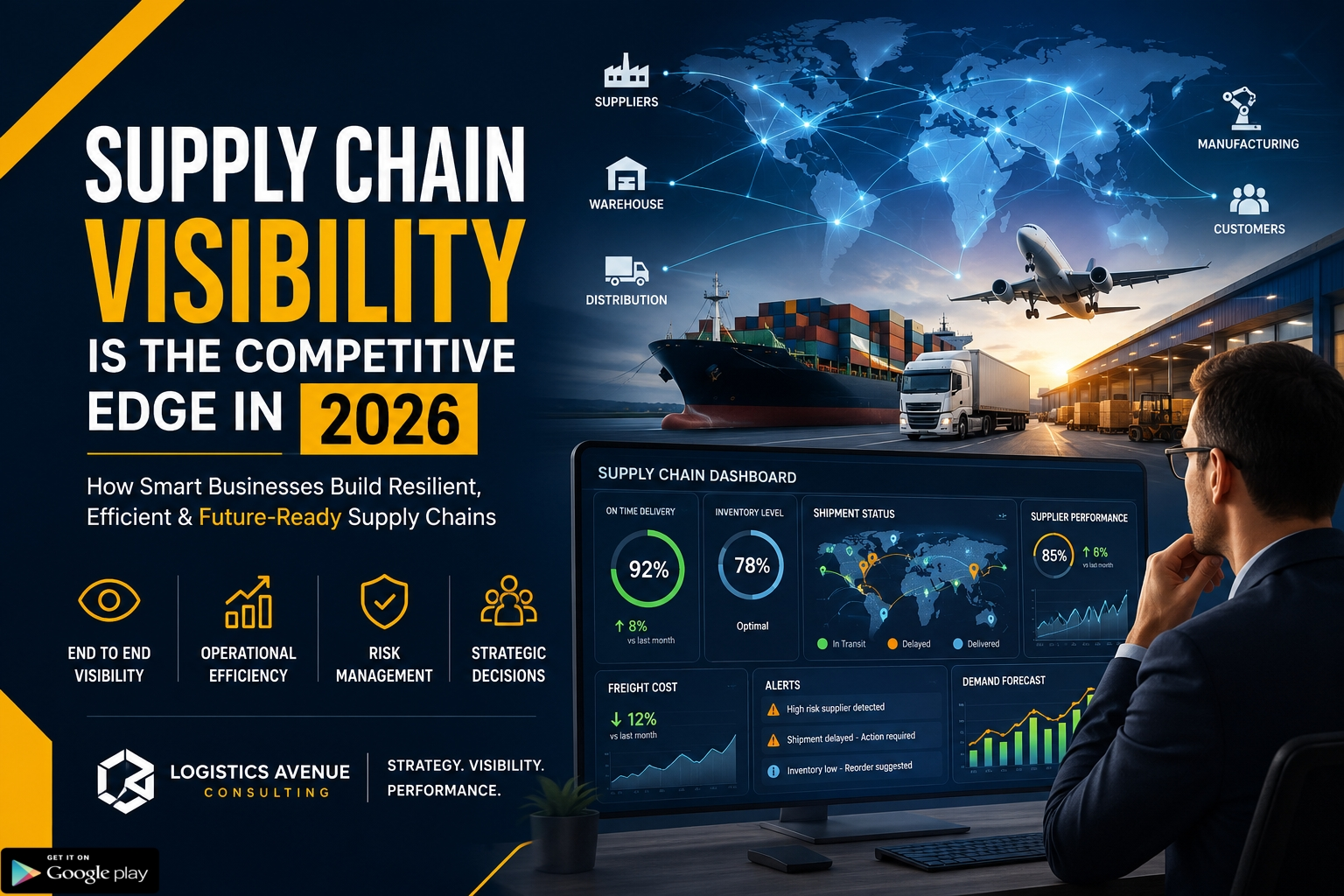
The Silent Supply Chain Crisis: Why Visibility Is Becoming the Biggest Competitive Advantage in 2026
13 minutes, 29 seconds
-243 Views 0 Comments 0 Likes 0 Reviews
In boardrooms around the world, supply chain conversations are changing. A few years ago, businesses focused primarily on reducing logistics costs and improving delivery speed. Today, executives are asking a different question: Do we actually know what's happening across our supply chain in real time?
The answer is often no.
Despite significant investments in ERP systems, warehouse management platforms, transportation software, and analytics tools, many organizations still struggle with fragmented data, disconnected suppliers, limited shipment visibility, and delayed decision making. As supply chains become more global and customer expectations continue to rise, visibility has evolved from a competitive advantage into a business necessity.
This shift is driving demand for logistics and supply chain consulting services, helping organizations create connected, data driven supply chains that are resilient, efficient, and prepared for future disruption.
Why Visibility Is the New Currency of Supply Chains
Supply chains have become increasingly complex. A single product may involve suppliers across multiple countries, several transportation partners, regional distribution centers, contract manufacturers, customs authorities, and last mile delivery providers.
Every additional touchpoint introduces new risks.
Without complete visibility, companies often experience:
- Inventory shortages despite full warehouses.
- Delayed customer deliveries.
- Excess safety stock.
- Rising transportation expenses.
- Poor supplier collaboration.
- Slow responses to unexpected disruptions.
Visibility allows decision makers to identify these issues before they become expensive operational problems.
Instead of reacting after delays occur, organizations can predict disruptions, adjust inventory levels, reroute shipments, and improve customer communication.
Cost Reduction Alone Is No Longer Enough
For years, logistics strategies focused almost exclusively on lowering operational costs.
While cost optimization remains important, businesses are discovering that reducing expenses without improving visibility often creates new risks.
For example, selecting the lowest cost supplier may increase transportation lead times.
Reducing warehouse inventory might improve cash flow but increase stockout risks.
Consolidating shipments may lower freight costs while reducing delivery flexibility.
The objective today isn't simply spending less.
It's making better operational decisions using accurate, real time information.
This is where end to end logistics and supply chain consulting creates measurable value by balancing efficiency with resilience.
The Hidden Cost of Disconnected Systems
Many organizations believe they have digital supply chains simply because they use modern software.
Unfortunately, technology alone doesn't solve visibility problems.
It's common to find businesses operating with:
- Separate ERP platforms.
- Independent warehouse systems.
- Different transportation software.
- Supplier portals that don't communicate.
- Manual spreadsheets.
- Email based approvals.
The result is fragmented information.
Operations teams spend valuable time collecting data instead of acting on it.
Executives receive reports that describe yesterday's performance rather than today's reality.
Customers experience delays because nobody identified issues early enough.
A successful logistics and supply chain consultancy begins by connecting information before recommending technology investments.
AI Is Powerful, But Clean Data Matters More
Artificial intelligence dominates industry conversations. Predictive demand planning. Smart inventory optimization. Autonomous warehouses. Intelligent transportation planning. These technologies certainly offer tremendous opportunities.
However, AI cannot compensate for inaccurate data. If supplier information is inconsistent...
If inventory records are unreliable... If warehouse transactions aren't synchronized...
Even the most advanced AI platform will generate poor recommendations.
Organizations that achieve the greatest return on AI investments first establish reliable operational data.
Only then can predictive technologies deliver meaningful insights.
Manufacturers Need Different Strategies Than Retailers
One mistake many businesses make is assuming every supply chain should follow the same model.
Manufacturers focus on:
- Production continuity
- Supplier performance
- Raw material availability
- Capacity planning
Retailers prioritize:
- Inventory availability
- Seasonal demand
- Customer experience
- Omnichannel fulfillment
Distributors often emphasize:
- Warehouse utilization
- Transportation efficiency
- Delivery performance
- Network optimization
Meanwhile, eCommerce companies require rapid fulfillment, accurate inventory synchronization, and flexible last mile delivery.
Because every industry operates differently, successful logistics and supply chain consulting solutions are always tailored to business objectives rather than using generic best practices.
Visibility Creates Better Business Decisions
When executives gain complete operational visibility, decisions improve across the organization.
Instead of guessing future inventory requirements, businesses forecast demand with greater confidence.
Instead of reacting to supplier disruptions, procurement teams identify risks earlier.
Instead of overstocking warehouses, planners optimize inventory levels using real time data.
Instead of discovering transportation delays after customer complaints, logistics teams proactively reroute shipments.
Visibility transforms operational management from reactive into predictive.
This shift has become one of the defining characteristics of high performing supply chains in 2026.
Digital Transformation Is About People Too
Many digital transformation initiatives fail because organizations concentrate only on software implementation.
Technology should support people.
Not replace them.
Successful transformation requires:
- Clear operational processes.
- Standardized workflows.
- Employee training.
- Cross functional collaboration.
- Executive leadership.
- Performance measurement.
The most effective logistics and supply chain consulting partner helps organizations improve processes before implementing technology, ensuring that every investment produces measurable operational improvements.
How Leading Businesses Build End to End Visibility
Supply chain visibility doesn't happen overnight. It requires a structured approach that aligns people, processes, and technology. Organizations that consistently outperform competitors usually follow a phased transformation instead of trying to modernize everything at once.
A practical roadmap often includes:
1. Assess the Current Supply Chain
The first step is understanding where inefficiencies exist. This involves reviewing procurement, inventory, warehousing, transportation, supplier collaboration, and customer fulfillment. Many companies discover that delays are caused not by a lack of resources but by disconnected processes and poor information flow.
2. Integrate Systems
ERP, WMS, TMS, CRM, and procurement platforms should exchange data seamlessly. Eliminating information silos enables every department to work with the same accurate, real time information.
3. Improve Data Quality
Visibility depends on reliable data. Standardizing product information, supplier records, inventory data, and operational reporting improves forecasting accuracy and decision making.
4. Monitor the Right KPIs
Instead of measuring only logistics costs, successful organizations monitor indicators such as:
- Order fulfillment rate
- Inventory accuracy
- Supplier performance
- On time delivery
- Warehouse productivity
- Perfect order percentage
- Transportation efficiency
- Customer service levels
These metrics provide a more complete picture of operational performance.
Emerging Trends That Will Shape Supply Chains Beyond 2026
Businesses are preparing for a future where supply chains become increasingly intelligent, connected, and automated.
Several trends are expected to accelerate over the coming years.
Predictive Decision Making
Organizations are moving beyond historical reporting toward predictive insights that identify disruptions before they occur.
Digital Twins
Virtual models of logistics networks allow businesses to test operational scenarios before making real world changes.
Sustainable Supply Chains
Environmental performance is becoming an important business metric. Companies are redesigning transportation networks, improving warehouse efficiency, and reducing waste without sacrificing service quality.
Supplier Collaboration Platforms
Businesses are replacing manual communication with collaborative digital platforms that improve forecasting, purchasing, and inventory visibility.
Automation With Human Oversight
Warehouse robotics, automated inventory tracking, and AI assisted planning continue to expand, but experienced professionals remain essential for strategic decision making.
Why Independent Consulting Delivers Greater Value
Technology vendors often recommend their own platforms.
Logistics providers naturally promote their own services.
An independent logistics and supply chain consulting company takes a different approach.
Instead of selling software or transportation capacity, consultants evaluate the business objectively, identify operational challenges, compare available solutions, and recommend strategies based solely on the client's goals.
This independent perspective helps organizations avoid expensive investments that fail to deliver measurable improvements.
Whether a company is redesigning its distribution network, selecting a new 3PL partner, improving warehouse operations, or expanding internationally, strategic guidance significantly reduces implementation risk.
Building a Supply Chain That Is Ready for the Future
The businesses that will lead tomorrow's markets are not necessarily those with the largest warehouses or the lowest transportation costs.
They will be the organizations that can see their operations clearly, respond quickly to change, and make informed decisions before competitors even recognize a problem.
Visibility is becoming the foundation for resilience, profitability, and long term growth.
Companies that invest today in stronger operational processes, connected technologies, reliable data, and continuous improvement will be better positioned to navigate future disruptions while delivering exceptional customer experiences.
Working with top logistics and supply chain consultants provides the expertise needed to transform complex operations into efficient, agile, and scalable supply chains. Whether you're looking to optimize procurement, improve inventory management, redesign your logistics network, or implement digital transformation initiatives, the right strategy creates lasting competitive advantages.
Conclusion
Supply chain excellence is no longer measured solely by cost savings or delivery speed. Modern businesses compete on agility, visibility, and operational intelligence.
As global markets become more interconnected and customer expectations continue to evolve, organizations need more than isolated improvements. They need a unified strategy that aligns procurement, warehousing, transportation, inventory, technology, and data into one efficient ecosystem.
At Logistics Avenue Consulting, we help organizations achieve exactly that. Through logistics and supply chain advisory services, we partner with manufacturers, retailers, distributors, and eCommerce businesses to identify opportunities, eliminate inefficiencies, and build resilient supply chains designed for sustainable growth. Whether you're planning a transformation project or simply looking to hire logistics and supply chain consultants, our goal is to deliver practical solutions that create measurable business value.
Frequently Asked Questions
1. What are logistics and supply chain consulting services?
They help businesses optimize logistics operations, inventory management, transportation, warehousing, procurement, supplier relationships, and overall supply chain performance through strategic planning and operational improvements.
2. Who benefits from supply chain consulting?
Manufacturers, retailers, distributors, wholesalers, healthcare organizations, and eCommerce businesses can all benefit from improved efficiency, lower costs, and better operational visibility.
3. Why is end to end supply chain visibility important?
It enables businesses to identify disruptions early, improve forecasting, optimize inventory, strengthen supplier collaboration, and make faster, data driven decisions.
4. When should a business hire logistics and supply chain consultants?
Organizations should consider consulting support when expanding operations, experiencing rising logistics costs, implementing new technology, selecting logistics partners, or undergoing supply chain transformation.
Logistics Consulting Supply Chain Consulting Logistics Management Supply Chain Strategy Inventory Optimization Warehouse Management Transportation Management

Photos

