
FEATURED
SPONSORED
VERIFIED
Related Blogs


Infinite Craft: The Browser Crafting Game That Kept Pulling Me Back In
8 minutes, 0 seconds
-8 Views 0 Comments 0 Likes 0 Reviews
I honestly thought Infinite Craft was going to be one of those “combine stuff, see what happens, done” browser games. I loaded it up, dragged Water, Fire, Earth, and Wind onto the crafting board, and just… started poking. The whole thing felt playful and low-pressure at first, like messing around with chemistry sets when you don’t really know what you’re doing.
But then I made my first few combos and realized I wasn’t just killing time. I was setting up my next curiosity. One discovery led to another, and suddenly I was staring at the board thinking, What happens if I combine these two? It wasn’t even a “goal” feeling. It was more like the game kept handing me breadcrumbs, and I couldn’t stop following them.
Combining elements, then getting pulled into “one more try”
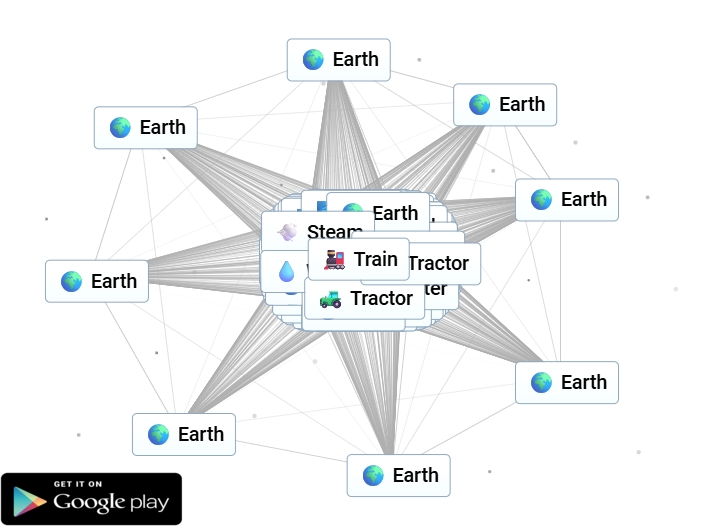
The way Infinite Craft works is simple on the surface: you drag two elements together, and if they create something new, that discovery gets added to your collection. Then you use that new result in another pairing. In theory, that’s all it is. In practice, it becomes weirdly addictive because there’s never just one obvious answer.
I’d put down a pair I was pretty sure about—something that felt like it should lead to a clear outcome—then the result would pop out and be totally different than I expected. That’s where the fun got real for me. Sometimes I’d get something useful, sometimes something surprising, and sometimes something that made me go back like, “Okay, but what if I try again?” The browser version even lets results vary when you repeat the same combination, so retrying isn’t just repeating—it’s exploring.
And honestly, repeating experiments made me change how I played. At first I was rushing, like I wanted the “best” or “biggest” discovery as fast as possible. Then I accidentally made a bad call—placed combinations too quickly, used up momentum on ideas that weren’t branching my collection in the direction I wanted. After that, I started paying more attention to the bigger picture: which new discovery could open more doors.
My collection grew… and so did my confusion (in a good way)
As the discoveries piled up, I realized how easy it is to lose track of what you already found. That’s where the PokéRogue Dex—sorry, wrong game—where the Infinite Craft search tool actually saved me. I could quickly find a previously discovered element instead of scrolling forever or second-guessing what something was called. There’s also a sorting option where you can organize discoveries by emoji, which is surprisingly helpful once your list becomes a chaotic wall of tiny icons.
I also liked that the board management tools aren’t stressful. The broom clears the crafting board without deleting your discoveries, so I can reset my setup and try a different chain without losing progress. And if I realize I don’t want something taking up space, the trash tool lets me remove a selected discovery from the collection—though I learned the hard way to be careful, because I still sometimes go, “Wait… did I actually want that?”
What surprised me most: there’s no “finish line”
The biggest thing that surprised me about Infinite Craft is how well it holds your attention without a single final objective. There’s no “complete the game and you’re done.” Instead, it’s more like building a personal web of ideas. Every new discovery gives you more raw material to experiment with, and that makes the game feel endless in the best way.
That open-ended crafting loop is exactly why I kept starting another run after I “failed” to get a specific result. Not because I lost—more because the next attempt felt like it might click. And in this version, since combinations can produce different outcomes when retried, “failure” doesn’t really mean anything. It just means the next experiment might be different.
A few lessons I learned (without pretending I’m good at this)
If I’m being real, I spent a lot of time at first trying combinations that felt obvious, then getting results that didn’t make sense to me. Over time, I started treating combinations like inspiration instead of fixed recipes. If a pair didn’t land the way I hoped, I’d check what I got, then use that new discovery in another direction. That mindset shift made my play feel less like guessing and more like building.
I also learned to keep some “fresh” elements ready on the board rather than constantly switching everything mid-experiment. Sometimes a small planning decision matters more than chasing a quick clear of new discoveries.
Try Infinite Craft and tell me what you discover
If you’re into browser games, creative puzzle stuff, or just experimenting with weird ideas, Infinite Craft is worth a try. Start with Water, Fire, Earth, and Wind, drag two elements together, and let the surprises guide you. Play a little, get confused in a fun way, and see what your collection turns into.
And if you do play—share what unexpected combo you found. I’m always down to compare discoveries, swap ideas, and see who can come up with the most “wait, how did that happen?” result.

Photos

