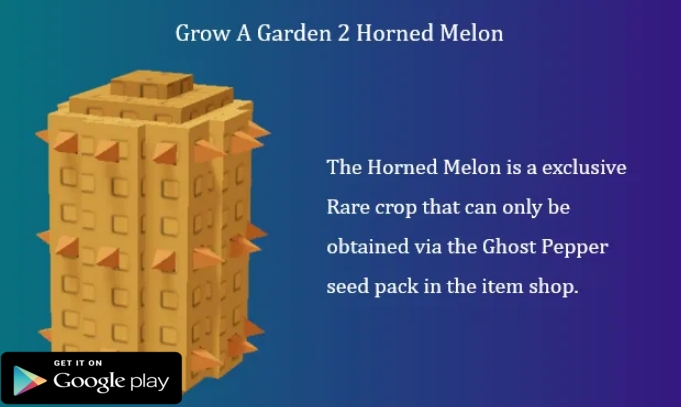
If you have been spending any time in Grow A Garden 2 lately, you know that the grind for the perfect backyard setup is real. You start out with basic carrots and flowers, but eventually, you want the cool stuff. Enter the Horned Melon. It is classified as a "Rare" tier crop in the game, but how hard is it actually to get your hands on one, and is it even worth the effort? Let's break down exactly what you need to know from a player's perspective.
The Real Numbers Behind Getting a Horned Melon
First things first: you cannot just stroll into the standard seed shop and buy a Horned Melon seed with your regular pocket change. The game locks this one behind a specific premium option called the Ghost Pepper Pack, which you have to grab from the in-game Store.
Once you get your hands on a Ghost Pepper Pack, you are at the mercy of the gacha gods. According to the official wiki, the drop rates for the pack look like this:
-
Baby Cactus: 50% chance (Common pull)
-
Horned Melon: 30% chance (The sweet spot)
-
Glow Mushroom: 15% chance
-
Poison Ivy: 4% chance
A 30% drop rate is actually pretty generous for a Rare tier item. It means you have a nearly one-in-three shot every time you crack open a pack. You might get unluckily spammed with Baby Cacti at first, but it shouldn't take too many tries before a Horned Melon pops up.
Why the Horned Melon is Actually a Great Investment
So, why are people targeting this weird-looking fruit? It boils down to efficiency.
Unlike a lot of the starter plants that you harvest once and have to replant all over again, the Horned Melon is a multi-harvest crop. You plant it, let it grow, and then you can keep coming back to harvest fruits from it multiple times. This makes it incredibly low-maintenance.
If you look at community discussions and major gaming tier lists, the Horned Melon usually lands squarely in the B-Tier. It is not an absolute endgame powerhouse like the Mythic or Super Rare setups, but that is not its job.
Think of the Horned Melon as your ultimate mid-game stepping stone. It provides a highly stable, passive stream of income. You can plant a row of these, let them generate cash for you with minimal effort, and use that steady bankroll to fund your transition into the high-end, super-expensive endgame crops.